

Sustainability
What is Sustainability?
The U.S. National Environmental Policy Act of 1969 declared as its goal a national policy to "create and maintain conditions under which [humans] and nature can exist in productive harmony, and fulfill the social, economic and other requirements of present and future generations of Americans."
The most widely quoted definition internationally is the "Brundtland definition" of the 1987 Report of the World Commission on Environment and Development – that sustainability means "meeting the needs of the present without compromising the ability of future generations to meet their own needs."
Sustainability is studied and managed over many scales (levels or frames of reference) of time and space and in many contexts of environmental, social and economic organization. The focus ranges from the total carrying capacity (sustainability) of planet Earth to the sustainability of economic sectors, ecosystems, countries, municipalities, neighbourhoods, home gardens, individual lives, individual goods and services, occupations, lifestyles, behaviour patterns and so on. In short, it can entail the full compass of biological and human activity or any part of it.
- What is Environmental Sustainability?
Environmental sustainability is the ability to maintain the qualities that are valued in the physical environment.
Traditionally, when environmental problems arise environmental managers work out how to reduce the damage or wastage. But it is not always easy to work out exactly when and where threats will have their effects and often the impacts are hard to reverse. So increasingly environmental managers adopt strategies aimed to prevent damage being done in the first place. A full sustainability program needs to include actions to prevent threats and impacts from arising, actions to protect the environment from threats and damage, and restoration to reverse damage already done.
- What is Green Chemistry?
Green Chemistry, also called sustainable chemistry, is a chemical philosophy encouraging the design of products and processes that reduce or eliminate the use and generation of hazardous substances. Whereas environmental chemistry is the chemistry of the natural environment, and of pollutant chemicals in nature, green chemistry seeks to reduce and prevent pollution at its source. In 1990 the Pollution Prevention Act was passed in the United States. This act helped create a modus operandi for dealing with pollution in an original and innovative way. It aims to avoid problems before they happen.
Paul Anastas, then of the United States Environmental Protection Agency, and John C. Warner developed 12 principles of green chemistry, which help to explain what the definition means in practice -> 12 Principles (Link)
- What is Green Engineering?
Green Engineering is the process and design of products that conserve natural resources, and impact the natural environment as little as possible. The term is often applied to housing, but it can be used for automobiles, lights or any other sort of system or device that requires engineering, and incorporates sound environmental principles. Though green engineering is somewhat more expensive, many countries, recognizing the value of such work, have begun to offer tax breaks, and other incentives to those who incorporate its use.
Green Engineering Principles (Link) by Anastas, P.T., and Zimmerman, J.B., "Design through the Twelve Principles of Green Engineering", Env. Sci. and Tech., 37, 5, 94A-101A, 2003.
Why Sustainability is So Important
Best Green Cities - Top 5 USA
This Week in Focus
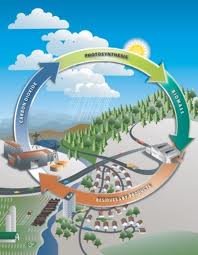 Biomass Conversion: Emerging Technologies, Feedstocks and Products
This report from EPA's Sustainability program describes the principal steps in biomass conversion. Eight emerging technologies are detailed in the report's Biomass Conversion Matrix (Appendix C) (PDF), which may be printed in 11-by-17-inch format ... read more
Did you know?
If we could make use of all of the energy from the sun that shines on the Earth, everyday could produce enough energy resources for 27 years.
Source: Tackling Climate Change - Government of South Australia
Useful Links
- 1. Sustainability: Direct Link
- 2. Green Chemistry Articles: RSC.org
- 3. Green Engineering - EPA: Direct Link
- 4. Dow Jones Sustainability Index: Sustainability-Index.com
- 5. Ministry for the Environment - New Zealand: Direct Link